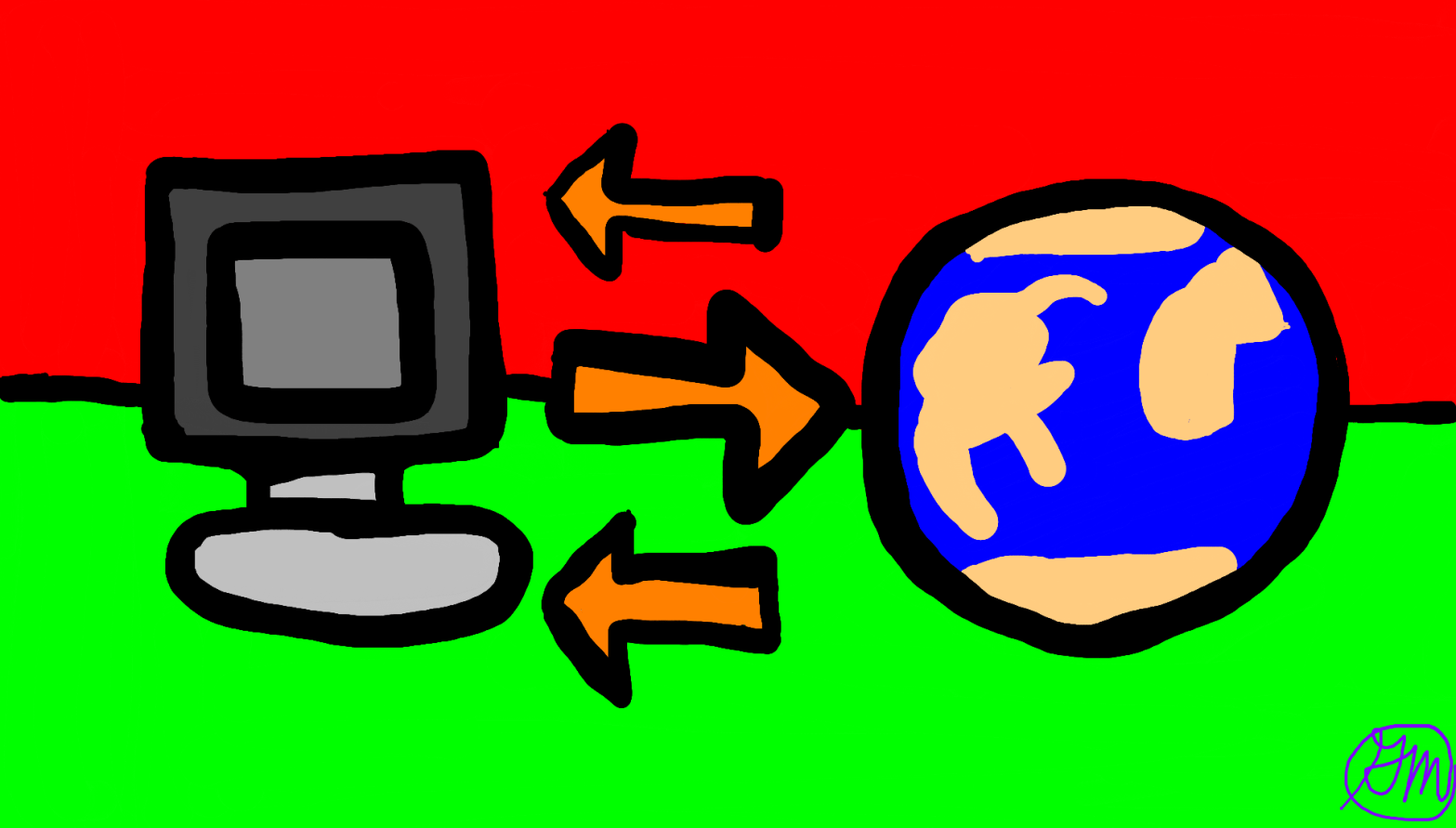
Media Literacy is something that, yes, sounds very unfamiliar. However, it is essential for all that really is going on in our daily lives. We are all attached to some sort of electric device like a phone, tablet, or computer. The reason I put the image that I drew (and yes, I am not a very good drawer I tried) is that we are constantly receiving info and sending out info as well. We receive more than we can ever send out. However, it is up to is on how we want to use that information. Depending on the person they could use information for good or bad, which is why I have the green and red. Depending on the information that we recieve, it is also harder to figure out what is fact and what is fiction.
According to W. James Potter’s “Media Literacy”, there are some ways to figure out what is fact and what is social information. “Factual information is raw, unprocessed, and context free; facts are discrete bits of information, such as names (of people, places, characters, etc. ), data, titles, definition of terms, formula, lists, and the like. Social information is composed of lessons that we infer from observing social interactions both in real life as well as media messages; these are guidelines that we learn about how to dress, talk, and act in order for other people in society to consider is attractive, smart, athketic, hip, and so forth” (Potter, page 23). The reason I put this point in particular is because I fell like this is really important nowadays. We get information from the media and also social media. News articles will pop up everywhere depending on where you are. Thing is, most news outlets have become very opinionated to the point where no one knows what is right and what is wrong anymore. Media Literacy is all about knowing how to not scroll past and to look at what you have come across, determine whether or not what you are looking at is true, it will help to start less drama and to help you become better with reading the media.
 Geneva's Blog